Leak detection and repairs
Leak Detection and Repairs in Bromley
Damp patch, ceiling stain or a water bill that's jumped? Non-invasive leak detection in Bromley that finds the source before anything gets ripped up.
Water coming through now? Turn off your stopcock, keep away from electrics, then call us. Urgent jobs are priced on the situation. We'll explain before anyone attends.
Signs of a hidden leak
- Damp or stains on ceilings, walls or skirting
- Bubbling paint or peeling wallpaper
- Musty smell or mould in one spot
- Soft, swollen or lifting floors
- Running water sound when everything's off
- Water bill up for no reason
On a water meter? Turn everything off, note the reading and wait an hour. If it's moved, you have a leak.
Leak detection in Bromley: how we find it
- Look and testWhere's the damp, what's above it, when does it get worse? Fittings are tested one at a time.
- PinpointNon-invasive tracer gas detection, moisture readings and pressure testing narrow it down. Floors or panels are only opened where needed.
- Fix and re-testResealed, refitted or replaced, then checked again until it's dry.
Usual culprits: worn seals on shower trays and baths, waste fittings under basins, and pipe joints under floors.
Non-invasive leak detection: a real job, step by step
Tracer gas finds the leak from above the floor, so only a small area is opened up to fix it. Here's how one job went, start to finish.
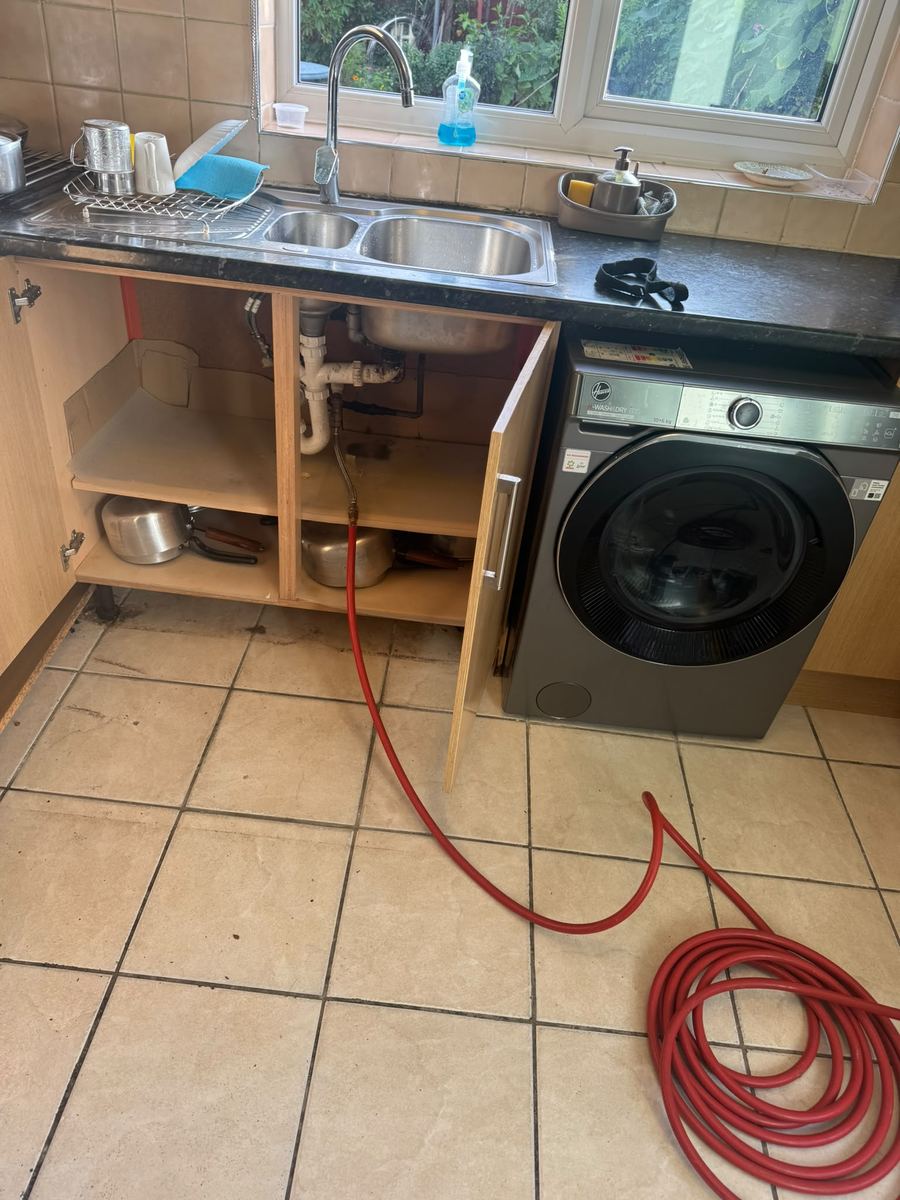
Step 1Connect to the pipeworkA hose is connected to the pipe under the kitchen sink. 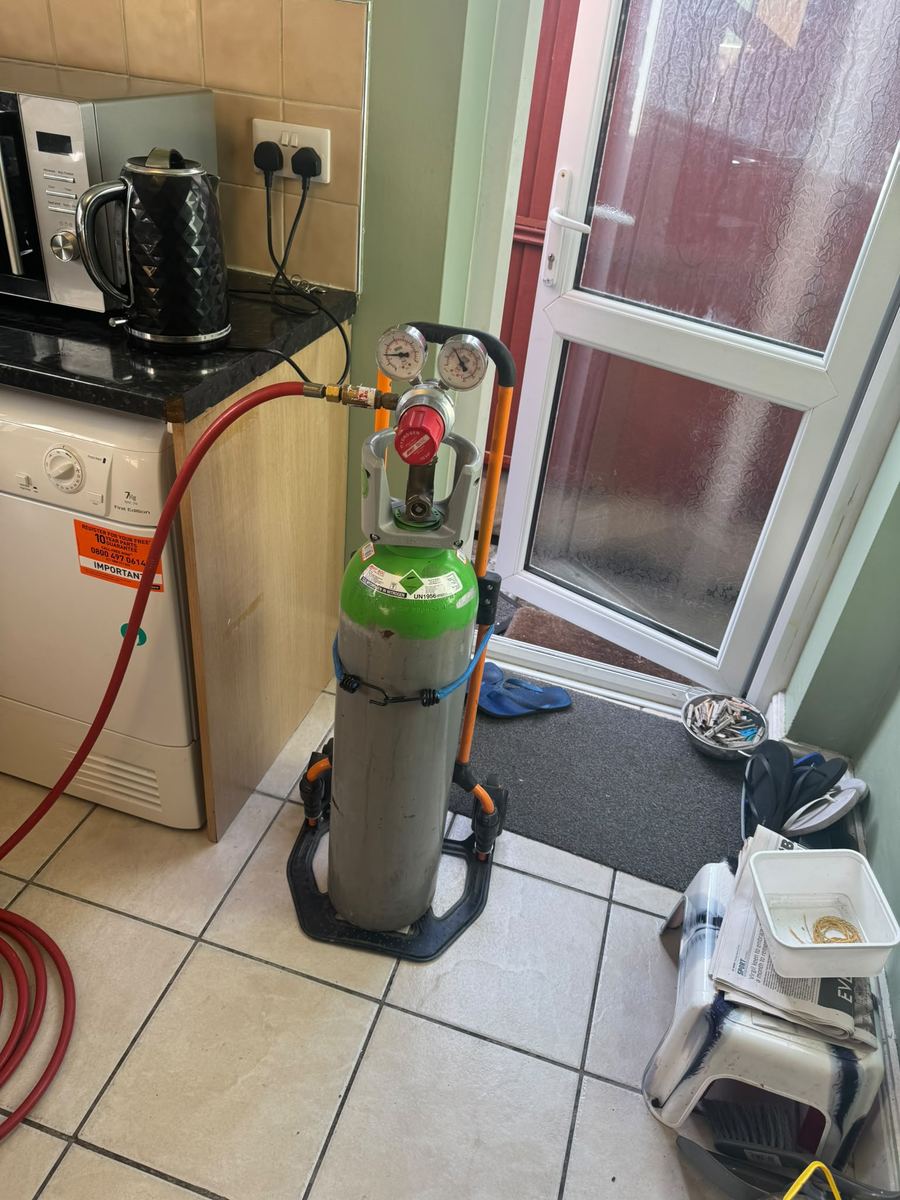
Step 2Add the tracer gasA safe, non-flammable nitrogen and hydrogen mix is fed into the pipe. 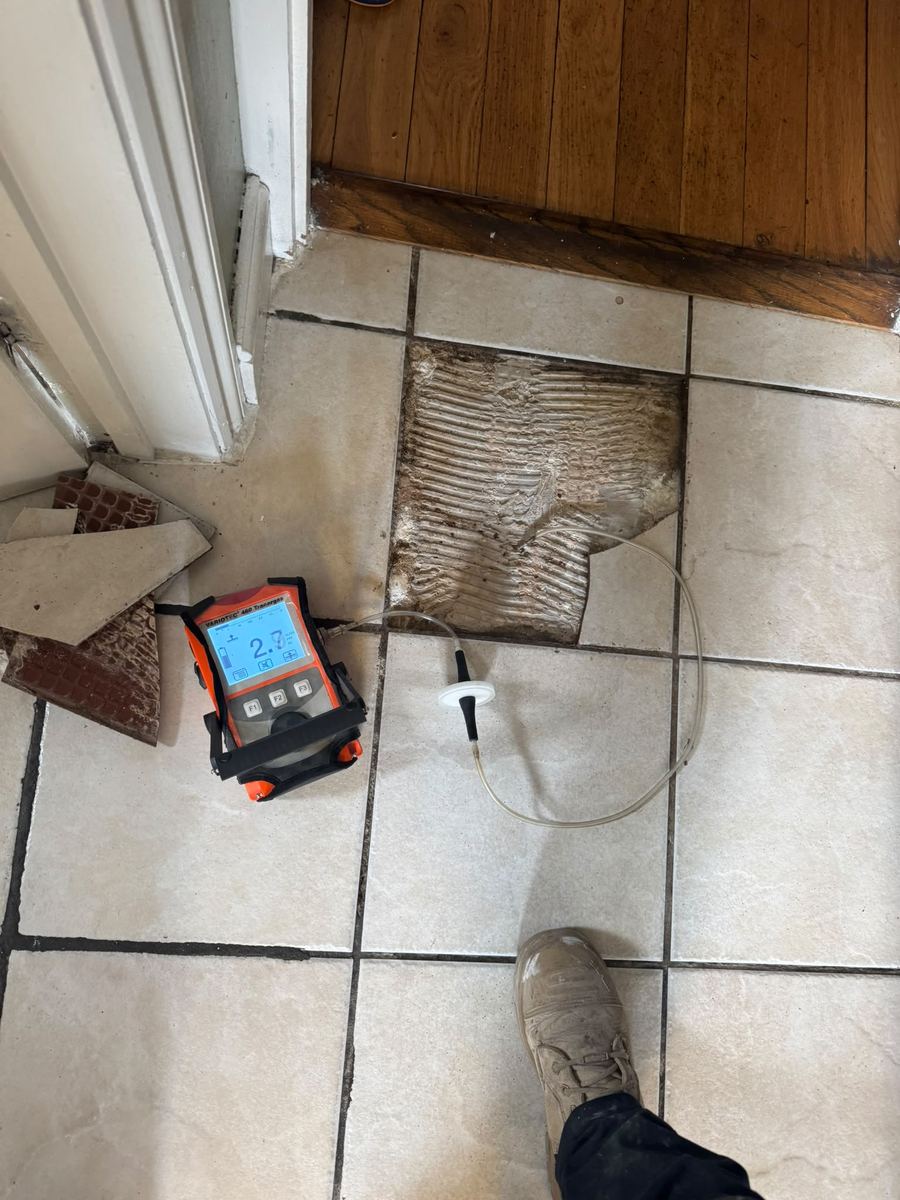
Step 3Pinpoint the leakA sensitive detector picks up the tiny amount of tracer gas escaping. 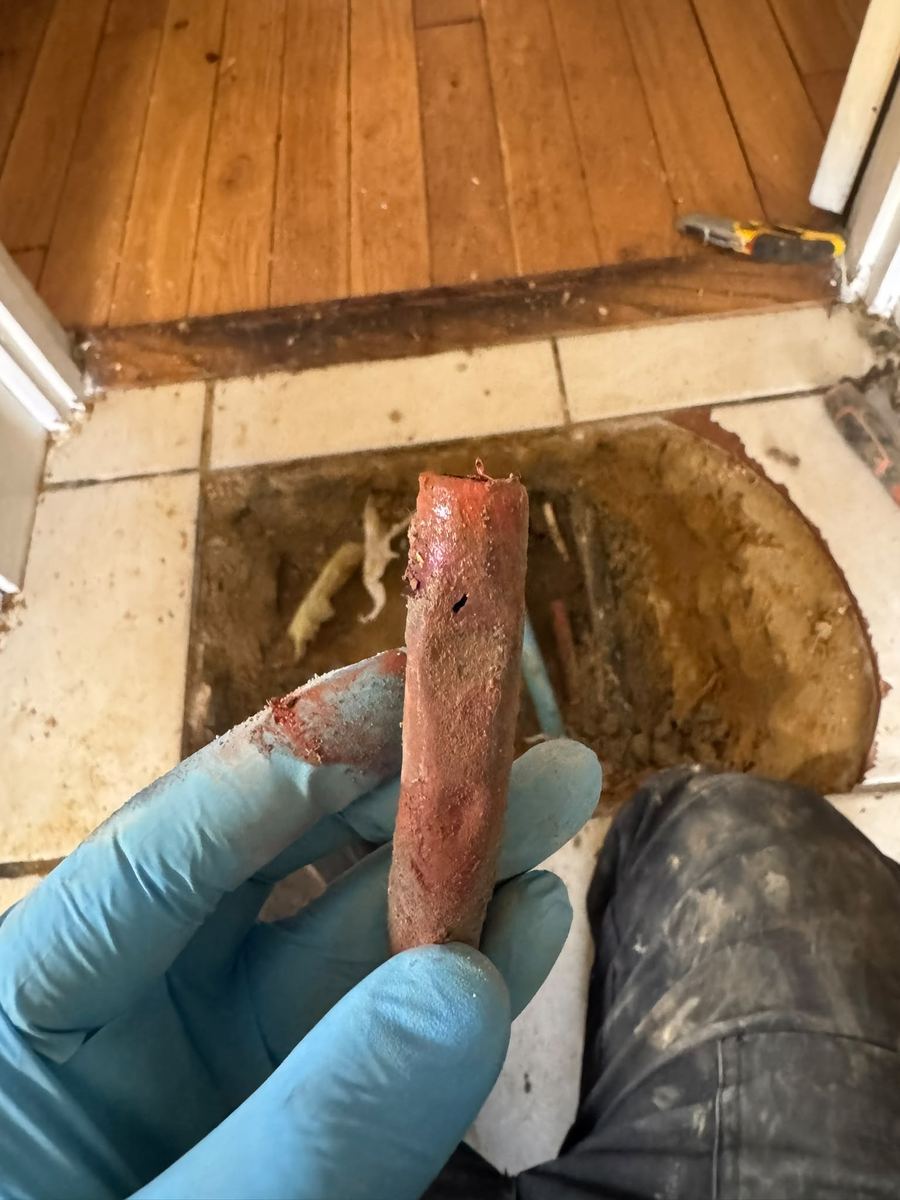
Step 4The causeA pinhole in the pipe, found under the opened tile. 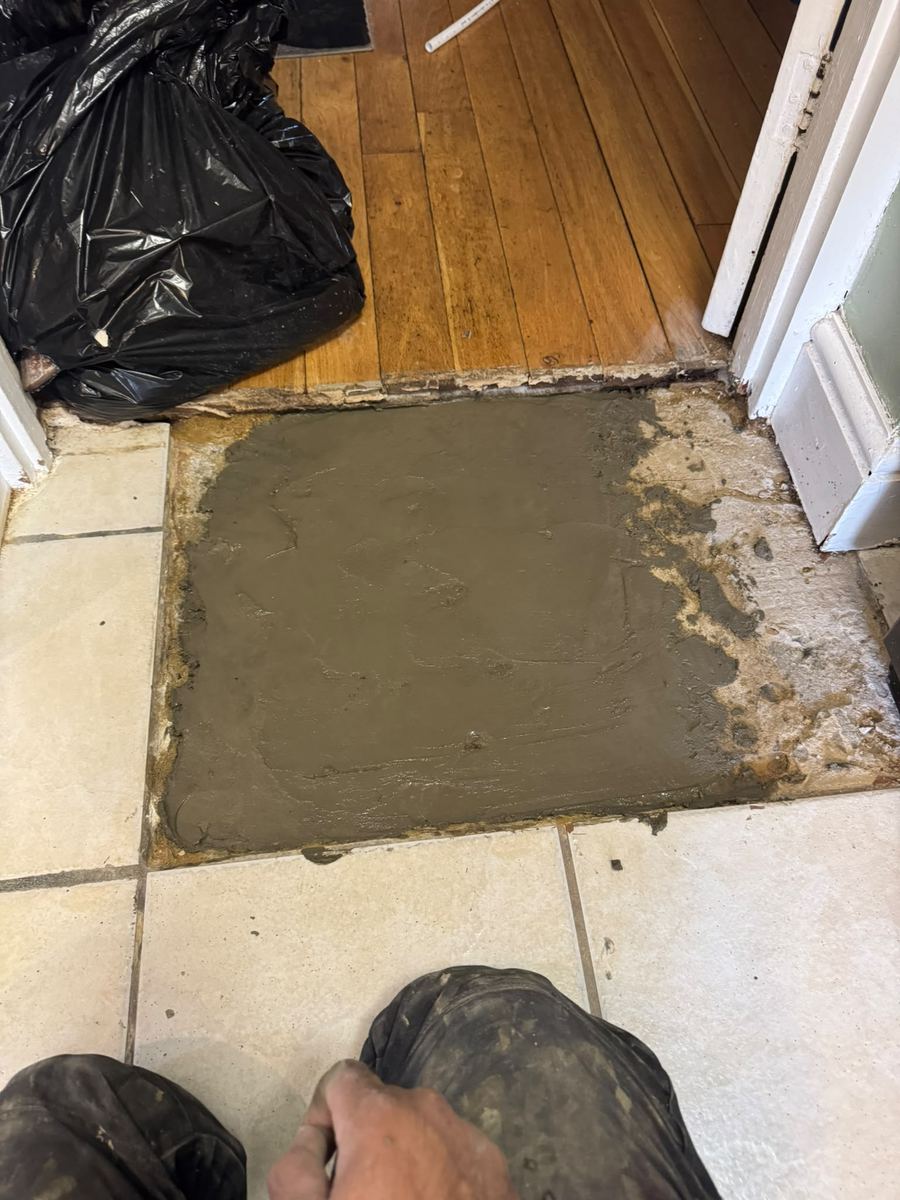
Step 5Floor made goodMortar fills the opened area after the repair. 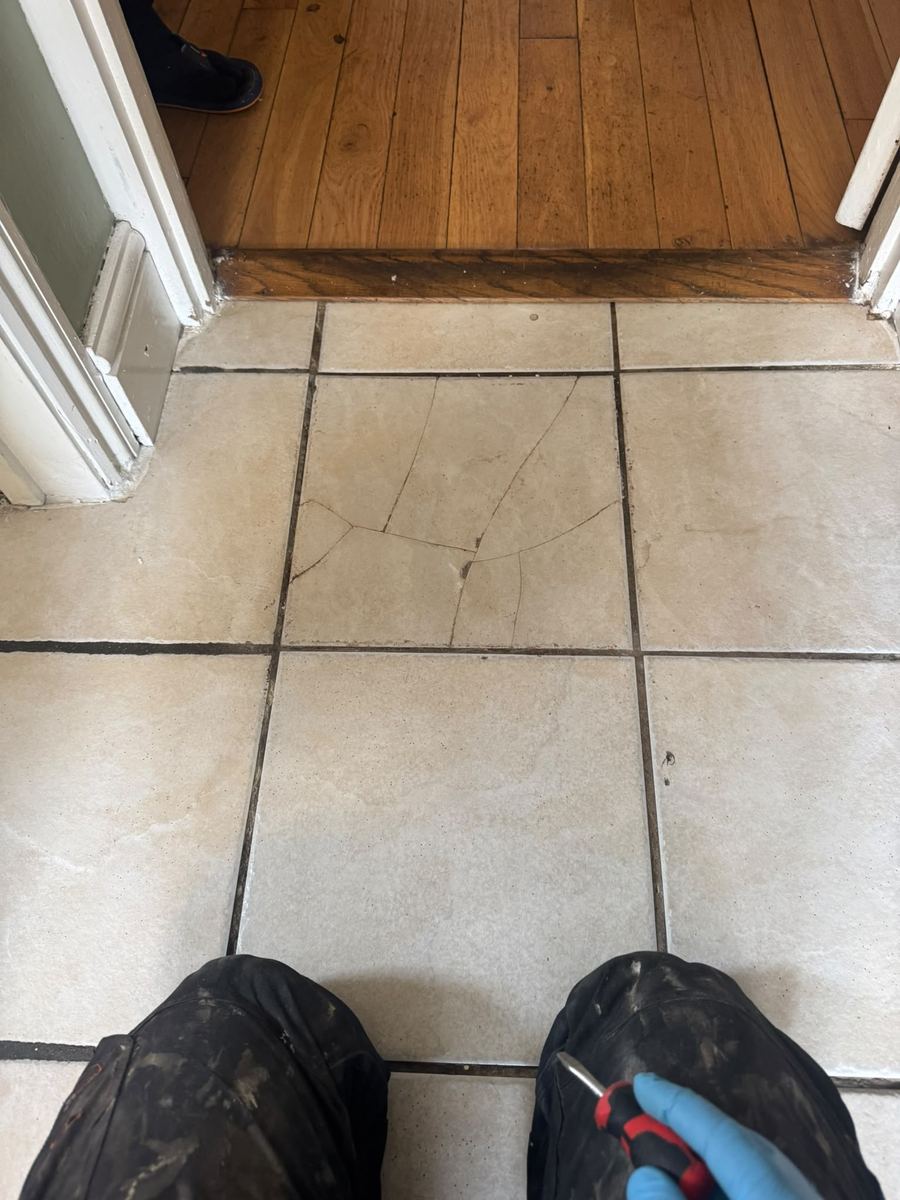
Step 6Tile put backThe tile is put back together.
Which method is used depends on where the damp is and what's in the way. Tracer gas is one of several; moisture readings and pressure testing are others.
While you wait
- Find your stopcock. Usually under the kitchen sink. In older homes, try the hallway or under the stairs.
- Stay away from electrics near water. Switch off at the consumer unit if needed.
- Move valuables and furniture out of the way.
- Take photos before anything is moved. Your insurer will want them.
Leak FAQs
What is non-invasive leak detection?
The pipe is filled with a safe, non-flammable tracer gas (a nitrogen and hydrogen mix). A sensitive detector picks up the tiny amount escaping, so the leak is located from above the floor or wall and only a small area is opened up to fix it.
Will you rip up my floor?
Not usually. The source is narrowed down first, so any opening up is kept small.
Does my insurance cover leak detection?
Many buildings policies include "trace and access" cover. Check with your insurer before work starts.
Can I get a report for my insurer?
Yes. A written summary with photos of the leak and the repair.
The stain is dry. Should I still worry?
Yes. Some leaks only show when one shower or tap is used. A stain that keeps coming back hasn't been fixed.
How long does it take to find?
Most leaks are found on the first visit. Ones that come and go can take longer.
Call us about a leak
The sooner it's found, the cheaper it is to fix. Small call-out fee, refunded if you go ahead.